


Work and Play Behind the Iron Curtain
20 June — 31 August 2014
FREE ENTRY
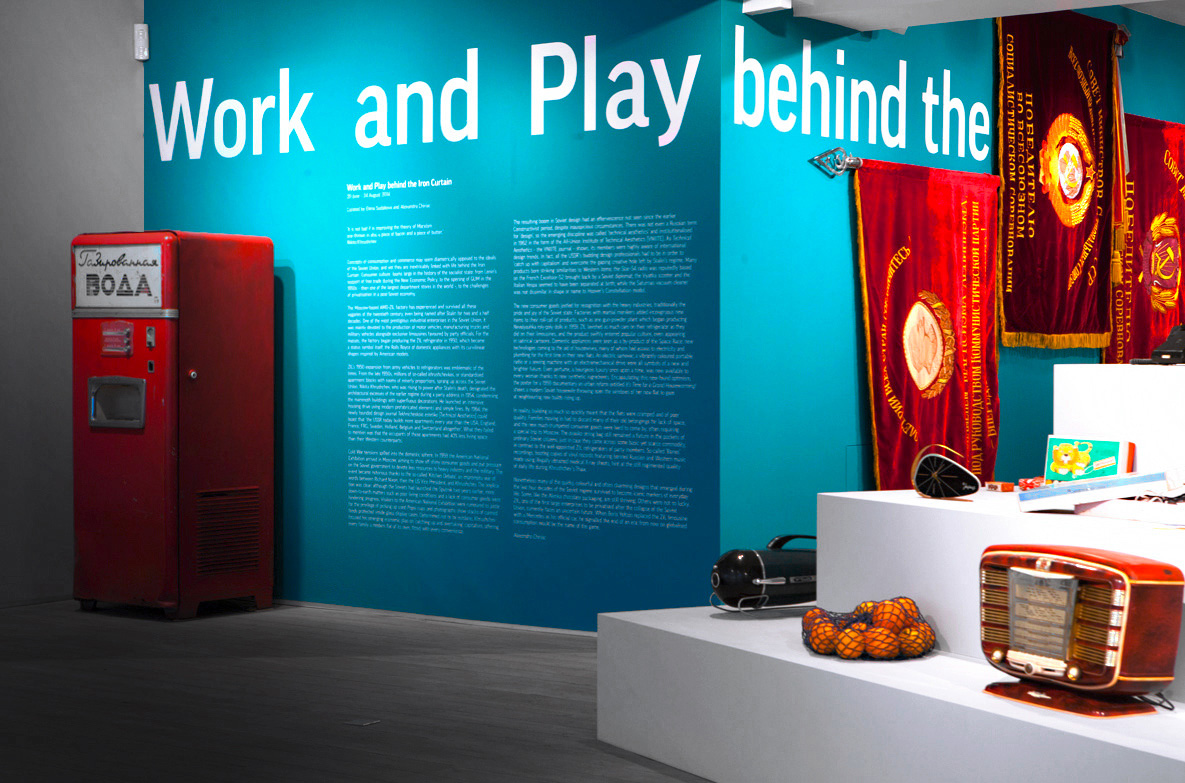
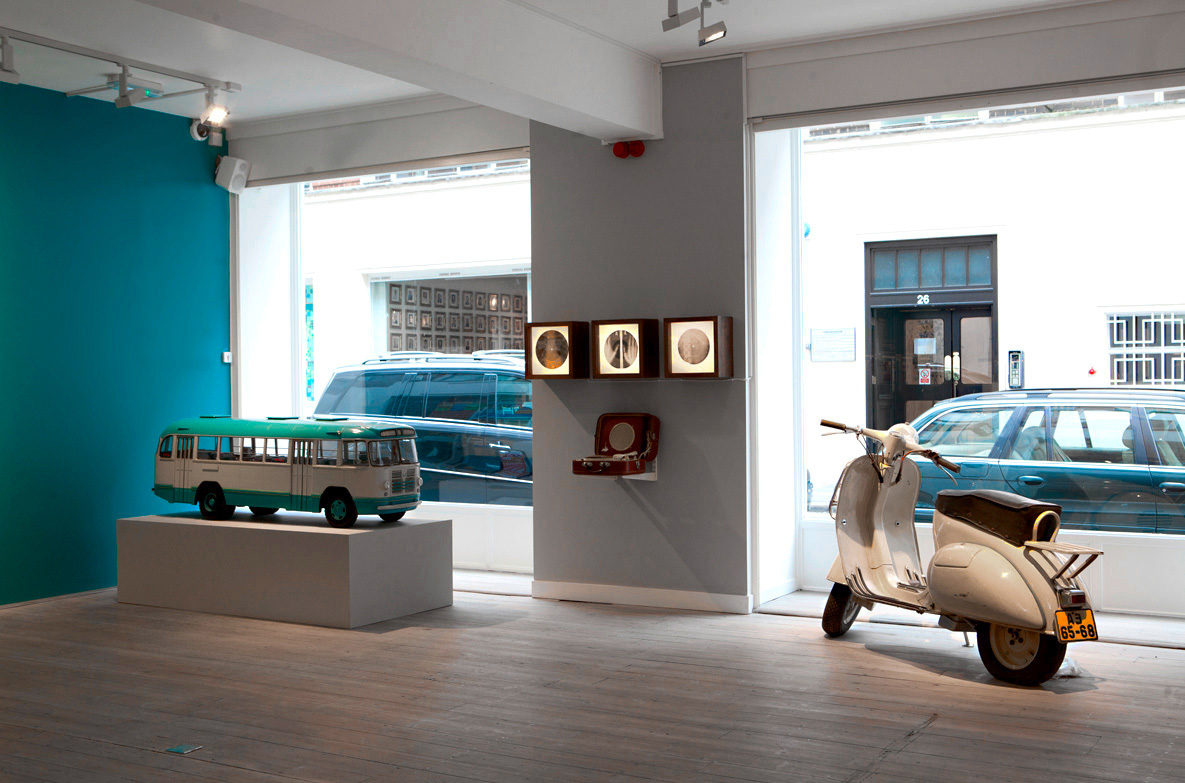
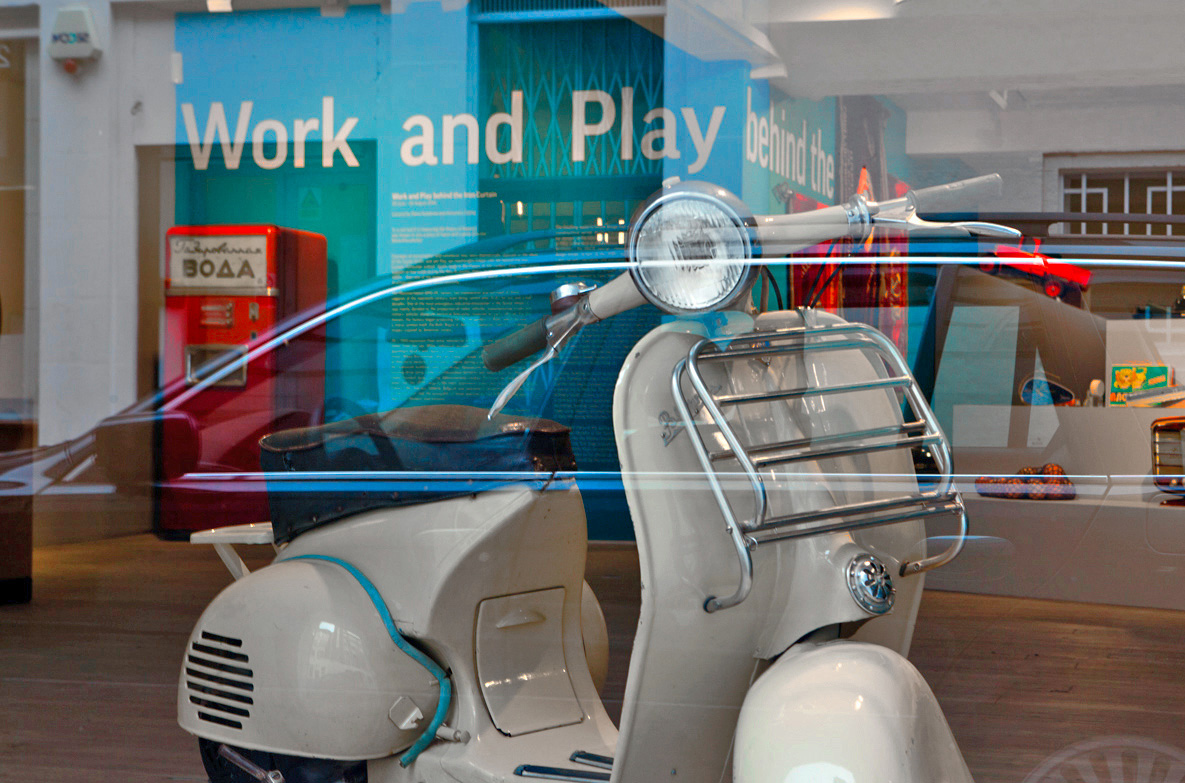
GRAD: Gallery for Russian Arts and Design is pleased to present ‘Work and Play Behind the Iron Curtain’, an exhibition examining the changing face of Soviet design from the 1917 Revolution to Perestroika. Curated by GRAD’s Elena Sudakova and Alexandra Chiriac, the exhibition features works on loan from the Moscow Design Museum and AMO-ZIL.
Work and Play Behind the Iron Curtain
20 June — 31 August 2014
FREE ENTRY
Curated by Elena Sudakova and Alexandra Chiriac
Exhibition design by Calum Storrie and Katya Sivers
Photographs by Roman Suslov and SSK Photography
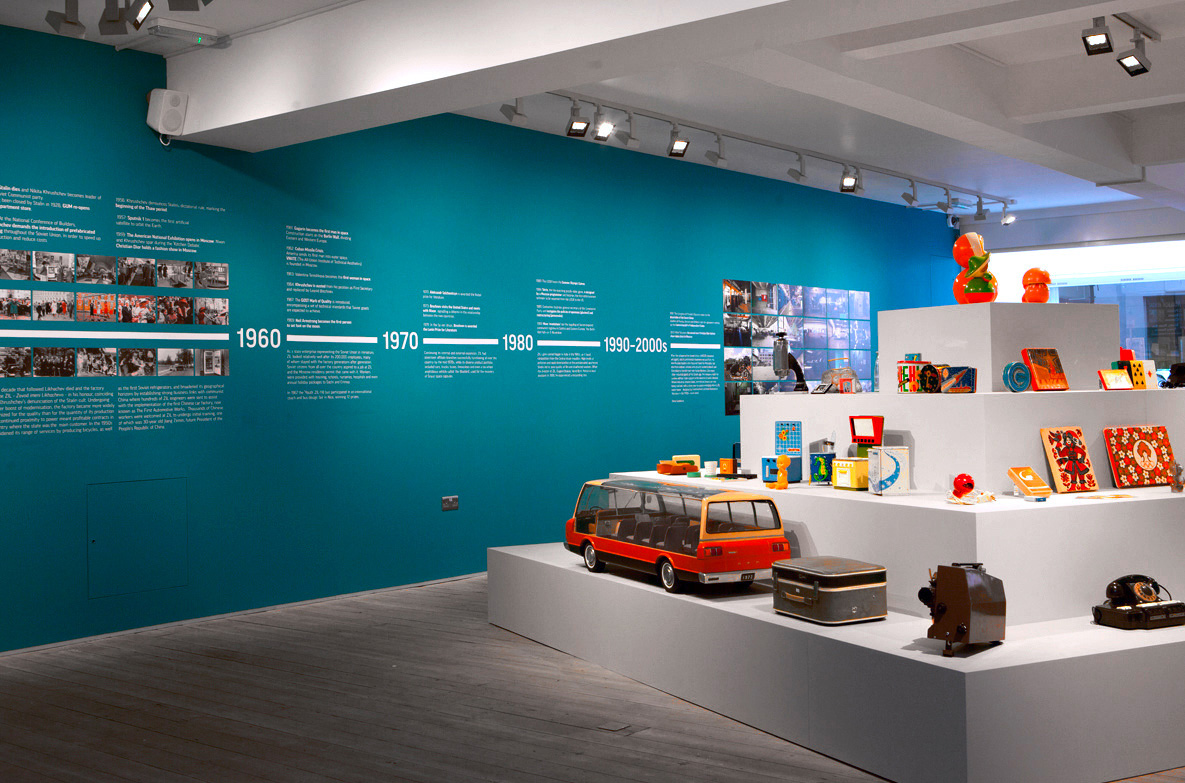
Work and Play Behind the Iron Curtain brings together over fifty key objects featuring the quirky, colourful and often charming design style that emerged from the 1950s in the Soviet Union. The preceding period, bound by more severe, functional principles, is examined through models and photographs from the famous ZIL factory, which produced both armoured trucks and domestic appliances. Part of GRAD’s on-going exploration of Russian design history, this show tackles a relatively unknown yet prolific period.
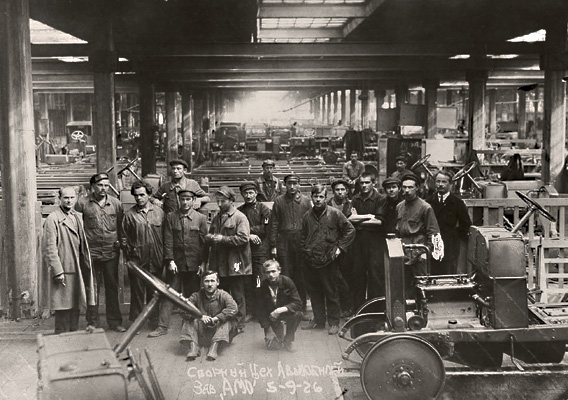
A group of workers at ZIL (then known as AMO), 1926
Courtesy GRAD and ZIL
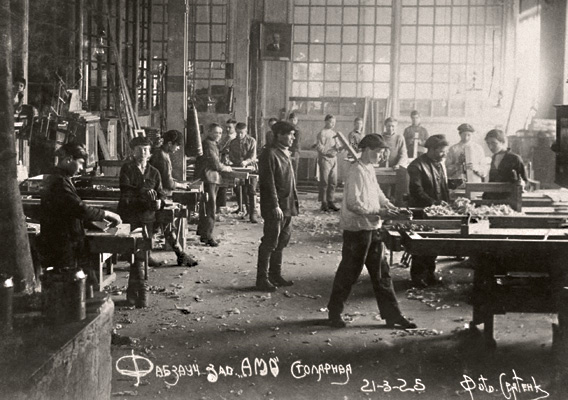
Workshop at ZIL (then known as AMO), 1925
Courtesy GRAD and ZIL
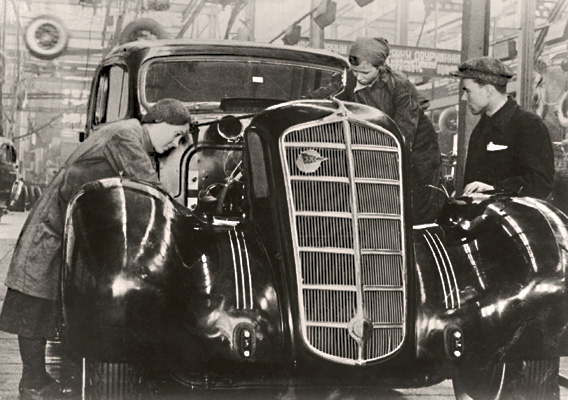
ZIL workers adding the finishing touches to a limousine, 1940s
Courtesy GRAD and ZIL
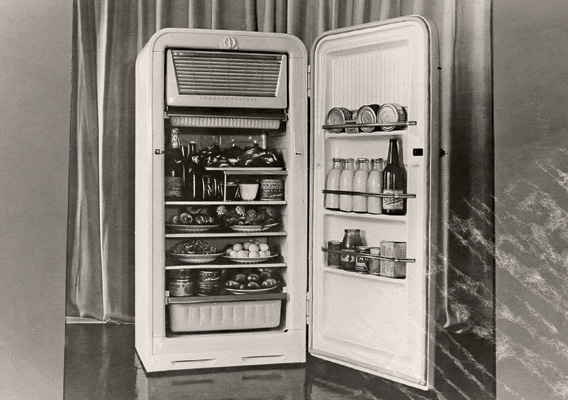
ZIL refrigerator, 1950s
Courtesy GRAD and ZIL
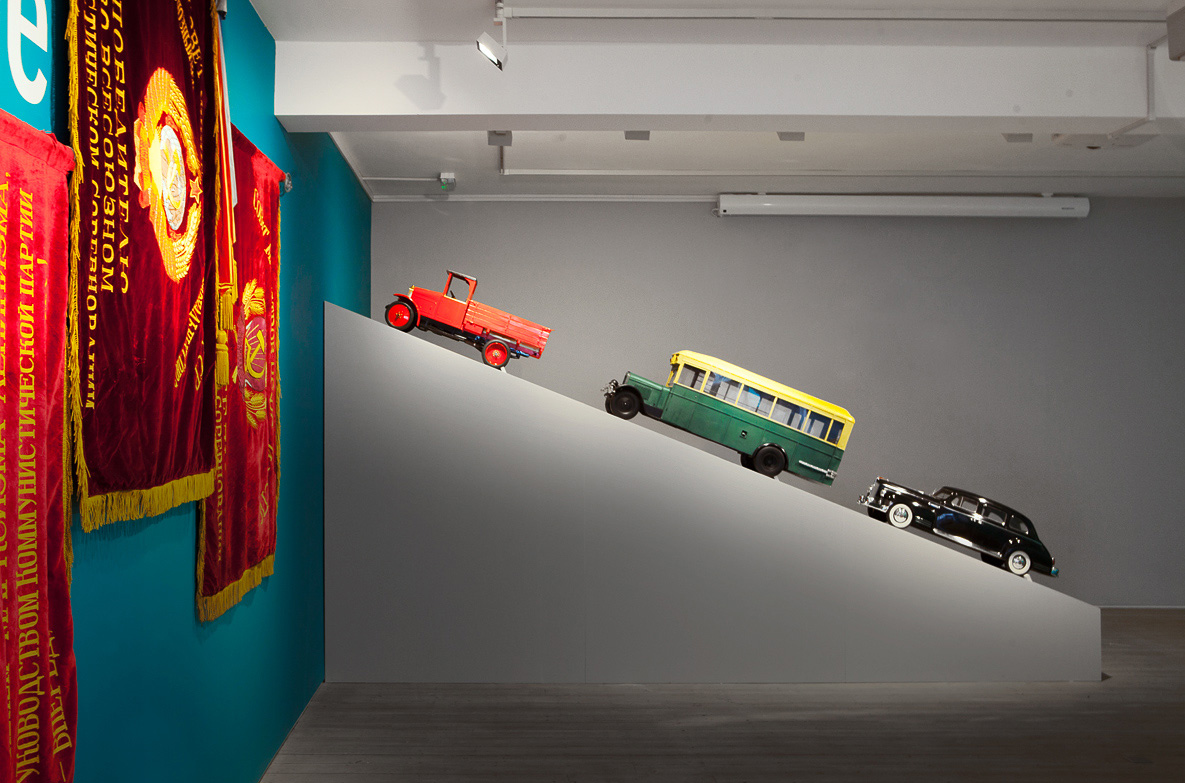
For decades the ZIL factory (so named in 1956, but in existence since 1916) was one of the most prestigious industrial enterprises in the country. Mainly devoted to the production of motor vehicles, it manufactured trucks and military vehicles alongside the exclusive limousines favoured by party officials. For the masses the factory began producing its own brand refrigerator in 1950, which became an aspirational object for Soviet homes, even if it often stood empty. Through motor vehicle prototypes and neverbefore-seen period photographs, GrAD’s display reveals the history of the factory, the changing lives of its workers, and why being a ZIL employee was seen as an enviable position.
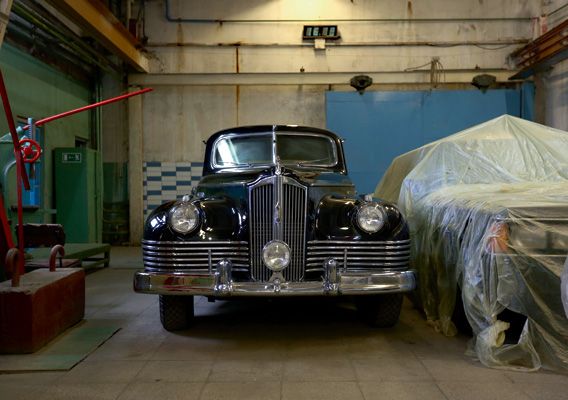
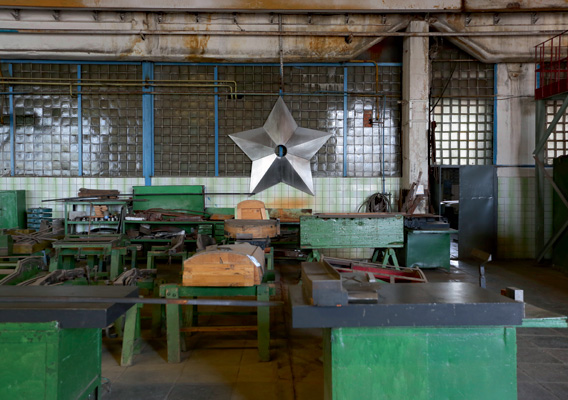
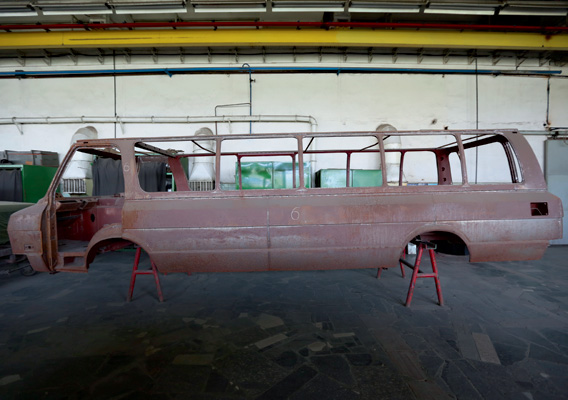
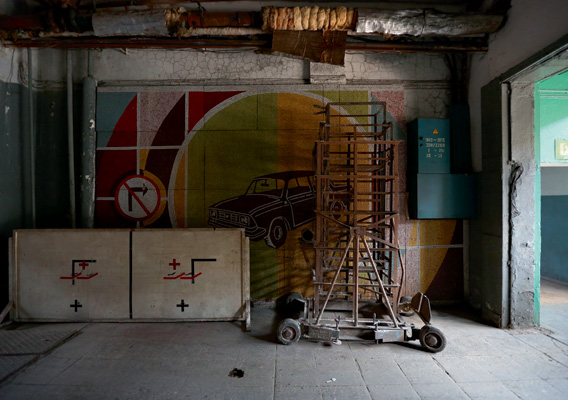
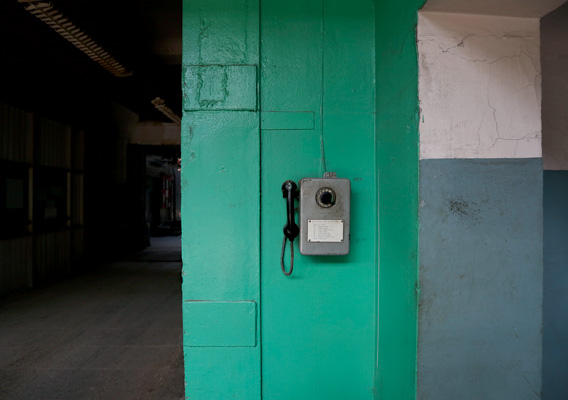
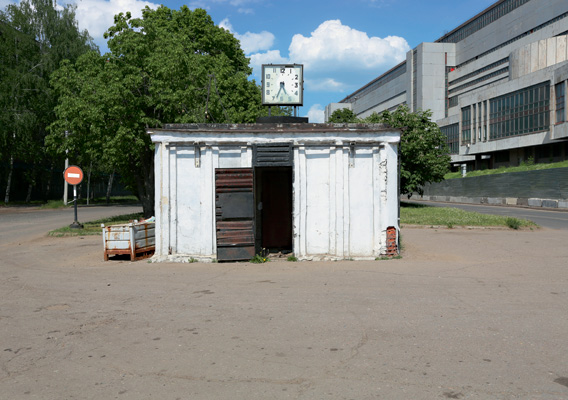
AMO-ZIL Today, 2014
Courtesy GRAD
AMO-ZIL Today, 2014
Courtesy GRAD
AMO-ZIL Today, 2014
Courtesy GRAD
AMO-ZIL Today, 2014
Courtesy GRAD
AMO-ZIL Today, 2014
Courtesy GRAD
AMO-ZIL Today, 2014
Courtesy GRAD
ZIL’s 1950 expansion from army vehicles to refrigerators was emblematic of the times. From the late 1950s, millions of so-called khrushchevkas, or standardised apartment blocks with rooms of miserly proportions, sprang up across the Soviet Union. These developments intensified in the wake of the American National Exhibition, held in Moscow in 1959, which had become notorious thanks to the impromptu war of words between Nixon and Khrushchev: the so-called ‘Kitchen Debate’. Although the Soviets had launched the Sputnik two years earlier, more down-to-earth matters such as poor living conditions and a lack of consumer goods were slow in being tackled. Visitors to the American National Exhibition were rumoured to jostle for the privilege of picking up used Pepsi cups. Determined not to be outdone, Khrushchev focused his emerging economic plan on ‘catching up and overtaking’ capitalism, and offering every family a modern flat of its own.
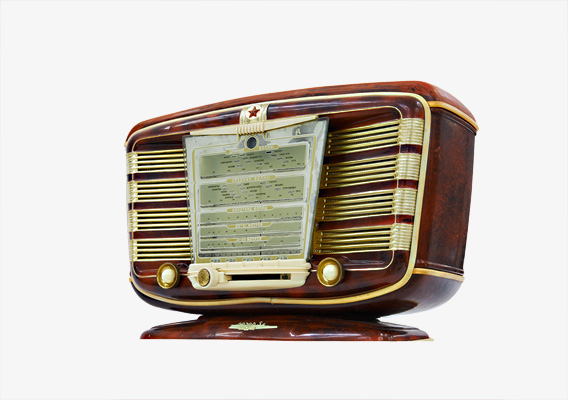
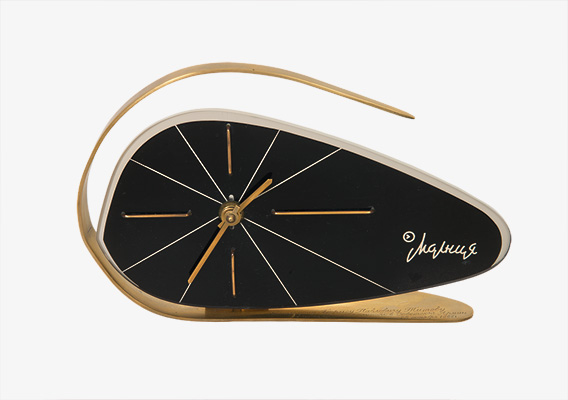
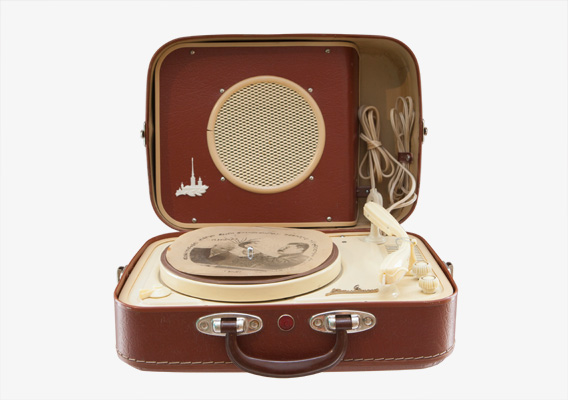
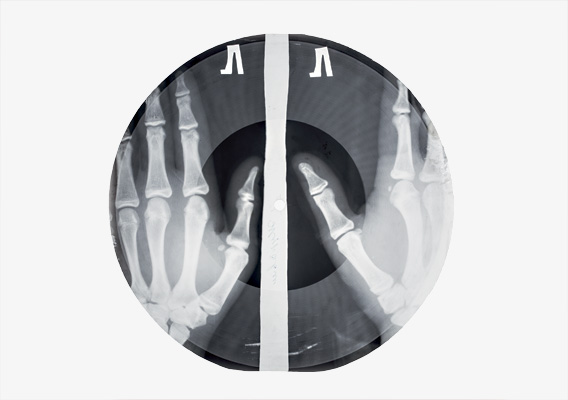
‘Zvezda-54’ (Star-54) Radio
Produced 1950s
Courtesy GRAD and Moscow Design Museum
‘Molniya’ (Lightning) Table Clock
1966
Courtesy GRAD and Moscow Design Museum
‘Iubileinyi RG -3’ Portable Record Player
Produced 1957 to 1960
Courtesy ‘X-Ray Audio’ Project/ Stephen Coates/ Paul Heartfield/ Antique Beat
Bootleg audio recordings cut onto used X-Ray Plates
c. 1957–1965
Courtesy ‘X-Ray Audio’ Project/ Stephen Coates/ Paul Heartfield/ Antique Beat
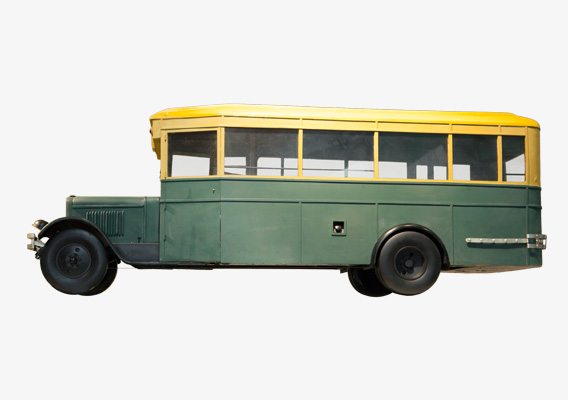
ZIS-8 Bus
Courtesy GRAD and AMO-ZIL
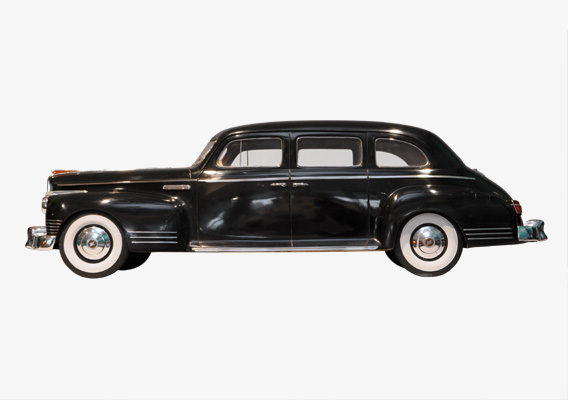
ZIS-110 Limousine
Produced from 1945 to 1958
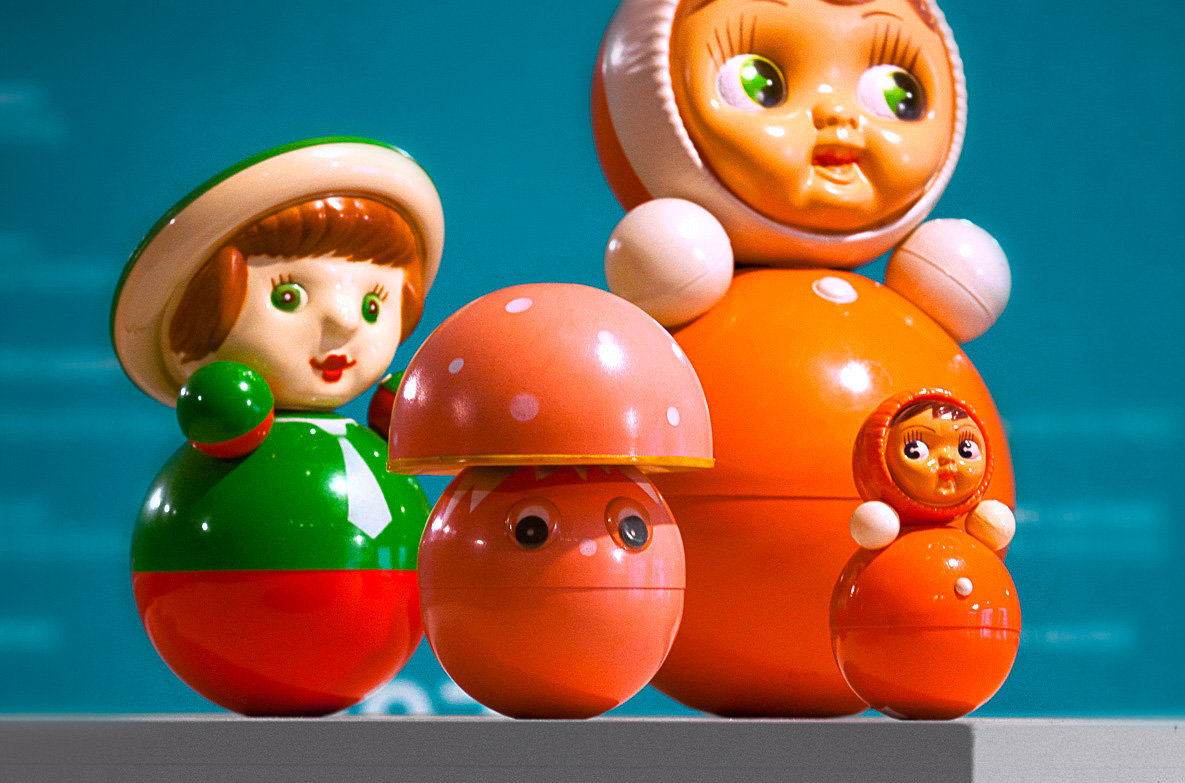
GRAD’s exhibition examines daily life in the new builds through the resulting boom in Soviet design, which saw the development of many beloved staple items of the Eastern Bloc: from the Chaika vacuum cleaner and the Vyatka scooter to Alenka chocolate and Nevalyashka roly-poly dolls. Bringing together domestic appliances, food and cosmetics packaging, electronic devices, toys and sporting equipment, the display reveals a lesser known side of Soviet society: consumerism and popular culture. Underground culture is hinted at through bootleg copies of vinyl records featuring banned Russian and Western music. Ingeniously made using illegally obtained medical X-ray sheets, they featured fragmented images of human skeletons and were circulated secretly up to the mid 1960s.
This exhibition provides a rare opportunity to examine every day life, work and play in the Soviet Union, through the prism of its quirky, yet iconic designs, be they quotidian items such as the avoska string shopping bag or the model of luxurious limousine made especially for Stalin.
Work and Play Behind the Iron Curtain Events
This summer we have design on our mind. Whether you are a fan of Constructivist graphics or an aficionado of Eastern Bloc fashion, join us for an exploration of all things well-made.
Soviet Fashion with Amber Jane Butchart
23 July 2014

7.00pm – 8.30pm
£7, students £5
Join fashion historian Amber Jane Butchart as she traces the development of fashion in the Soviet Union from 1950s to 1970s and examines Soviet women's ingenious solutions to frequent shortages and the sorely limited sartorial choices they faced. The talk will be followed by a Q&A and drinks in the gallery. Contact GRAD or visit Eventbrite to book your place.
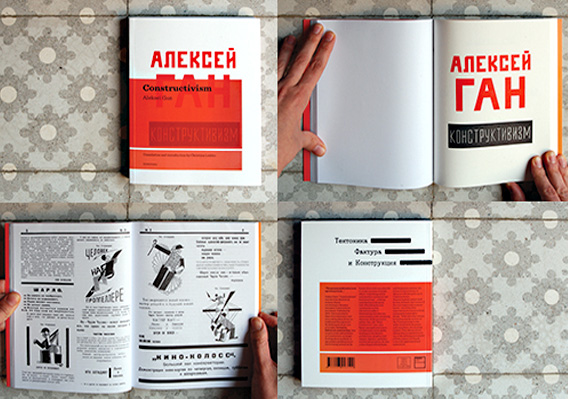
Book Launch: Constructivism by Aleksei Gan and Prof Christina Lodder
10 July 2014
6.30pm – 8.30pm
FREE ENTRY
Come along to the London launch of Constructivism, a brand new imprint of Aleksei Gan's defining treatise, translated and with an introduction by Christina Lodder. To celebrate this long-overdue publishing event, Professor Lodder will make a short presentation followed by a Q&A and drinks in the gallery. More information, and a fascinating video showing the book-making process, is available here.